
Electrical Tips, Installation
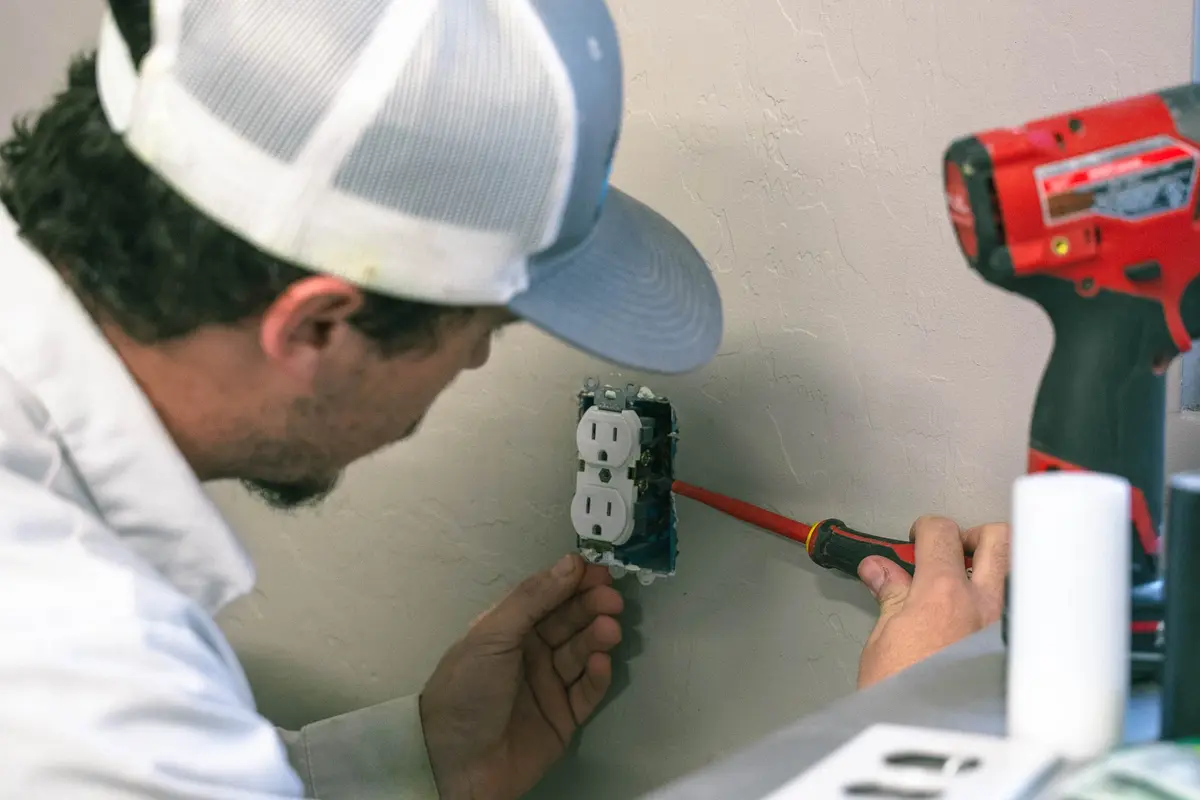
Adding an electrical outlet to your garage or patio typically costs between 0 and 0 for most homeowners, depending on outlet type, wiring distance, and local labor rates. The exact price shifts based on how far an electrician needs to run new wiring, whether a dedicated circuit is required, and what kind of outlet your project calls for.
Key Takeaways
- Most single-outlet installations in garages or patios land between $200 and $500 for the complete job.
- Outdoor and garage outlets require GFCI protection under the National Electrical Code (NEC).
- A 240V outlet for heavy equipment costs significantly more, typically $250 to $800 or higher.
- Wiring distance from your electrical panel is one of the biggest cost drivers.
- Permits typically run $50 to $100 and should always be pulled for new outlet installations.
- Getting a free estimate before work starts lets you compare pricing and avoid billing surprises.
What Actually Drives the Cost of Adding an Outlet
When homeowners ask, “How much does it cost to add an outlet to my garage or patio?” the honest answer is that no two jobs are priced exactly the same. Several variables push that final number up or down, and understanding them helps you plan your budget realistically.
Distance From the Electrical Panel
This is the single most influential factor. If we can tap into an existing interior outlet on the opposite wall of the garage, the job stays straightforward and affordable. Running wiring 10 to 20 feet from a nearby source is a very different proposition than pulling wire 60 feet across a finished ceiling or through masonry walls. Longer runs require more materials and more labor hours, which translates directly to a higher invoice.
Outlet Type
A standard 120V receptacle for a shop vac or phone charger costs far less to install than a 240V outlet for a welder, air compressor, or EV charger. Understanding electrical outlet types before calling for an estimate helps you communicate exactly what you need and avoid under-specifying the job.
Accessibility
Open stud bays in an unfinished garage are easy to work with. Finished drywall, concrete block, or a patio wall covered in stucco slows the job down. Expect labor costs to climb when walls need to be opened and patched afterward.
GFCI Requirements
Any outlet installed outdoors, in a garage, or in another wet or damp location must include GFCI (ground-fault circuit interrupter) protection under the NEC. GFCI outlets and breakers cost a bit more than standard receptacles, but they are non-negotiable from both a code and safety standpoint. This is not an area where cutting corners makes sense.
Permits
Most municipalities require a permit for new outlet installations. In the U.S., permits typically run $50 to $100 for a straightforward residential job. Always verify that your electrician pulls the permit and schedules any required inspections. Skipping this step can create problems when you sell your home.
Garage Outlet Costs: Standard vs. Heavy-Duty
|
Outlet Type |
Typical Cost Range | Circuit Required? | GFCI Required? |
| Standard 120V receptacle | $150-$400 | Existing (if capacity allows) |
Yes |
|
GFCI 120V receptacle |
$175-$420 | Existing (if capacity allows) | Yes |
| 240V / 220V outlet | $250-$800+ | New dedicated circuit |
No (but GFCI may apply) |
|
Subpanel + 240V outlet |
$600-$2,500 | New subpanel needed |
Varies |
Garages frequently need outlets capable of handling high-power loads. If your garage doubles as a workshop, a standard 15-amp or 20-amp outlet handles most hand tools and battery chargers just fine. The moment you add a table saw, air compressor, or EV charging station to the mix, you are likely looking at a 240V circuit and a corresponding jump in cost.
For a standard garage outlet on an existing circuit, the outlet installation cost from national averages in 2026 surveys puts the typical job near $300. For 240V work requiring a new circuit, plan for $250 to $800 as a baseline, and potentially $1,800 to $2,500 if additional conduit, an obstructed run, or a subpanel is involved.
Patio and Outdoor Outlet Costs
Outdoor outlet installation follows a similar pricing structure, generally ranging from $150 to $260 for a single weatherproof GFCI receptacle. Labor makes up the largest portion of that bill. Because outdoor outlets are fully exposed to rain, humidity, and temperature swings, they require weatherproof in-use covers and boxes rated for exterior use. These materials cost slightly more than standard indoor components, but they are required by code for any outlet on a patio, deck, or balcony.
The pricing for an outdoor receptacle also depends on whether the nearest power source is on an interior wall directly adjacent to the location of the new outlet. Understanding how to add an electrical outlet can help you make the best decision. Running wire through an exterior wall is often the simplest approach. If the nearest circuit is on the opposite side of the house, wiring costs increase proportionally.
We always recommend thinking through how you will use the outlet before deciding on placement. A single outdoor outlet near an outdoor kitchen, entertainment area, or patio furniture cluster is usually more useful than one tucked in a corner where it won’t get regular use.
What the Installation Process Looks Like
Many homeowners wonder what happens during a professional outlet installation. For a single new outlet in a garage or patio, here is how a typical job unfolds:
- Assessment: The electrician evaluates the nearest available circuit, checks its current load, and determines the best routing path for new wiring.
- Circuit verification: If the existing circuit has capacity, the new outlet can be added to it. If not, a new circuit from the panel is needed.
- Wiring run: Wire is routed through walls, ceilings, or conduit, depending on the structure and code requirements.
- Box installation: An outlet box is mounted at the planned location.
- Connections: The outlet is wired, GFCI protection is confirmed, and all connections are secured.
- Testing: The electrician tests the outlet under load and verifies GFCI functionality.
- Inspection: A permit inspection (if required locally) confirms that the work meets code requirements.
Each step of the process requires professional knowledge to ensure your new outlet is safe, code-compliant, and reliable, which is why electrical outlet installation is best left to a licensed electrician.
Things to Know
- One outlet rarely covers a whole garage. Building codes and practical use both suggest installing multiple outlets at workbench height and near the garage door opener if you’re doing a full setup.
- GFCI protection is not optional. Every outlet in a garage, outdoors, or within 6 feet of a water source must be GFCI-protected under NEC Article 210.8.
- Panel capacity matters. If your panel is already near capacity, adding a new circuit may require a panel upgrade, which can add $1,000 to $3,000 to the project.
- Not all outdoor boxes are equal. Use boxes and covers rated for “wet location” service for outdoor use, not just “damp location” hardware, especially in climates with heavy rain.
- Bundle work when possible. If you’re adding one outlet, consider whether you need two or three. Adding them during the same visit is far more cost-effective than scheduling separate trips.
- Always get a written estimate. Legitimate licensed electricians provide itemized quotes before starting work, so you understand exactly what you’re paying for.
DIY vs. Hiring a Licensed Electrician
Some homeowners consider tackling outlet additions themselves to save money. For minor repairs to existing outlets, that conversation is reasonable. For adding a brand-new outlet with new wiring, especially in a garage or outdoors, the risk profile changes significantly.
New outlet work in most U.S. states requires a permit, and unpermitted electrical work can void homeowner’s insurance coverage, create liability issues, and complicate a future home sale. There’s also the real risk of wiring errors that lead to arcing, overheating, or shock. Our electrical services outline what a professional installation entails and why it’s essential to have a licensed electrical contractor handle the work for safety and code compliance.
That said, if you understand electrical work, have confirmed your local jurisdiction allows homeowner permits, and are comfortable with the scope, it isn’t impossible to do some of this work yourself. Just know that the potential savings may not outweigh the permit, inspection, and material costs once everything is factored in.
Ready to Get an Honest Price on Your Outlet Project?
The fastest way to know what your specific garage or patio outlet will cost is to get a free, no-obligation estimate from a licensed Prescott Valley electrician who can assess your panel, routing options, and outlet requirements in person. At Assurance Electrical Services, we provide free estimates so you know the full price before any work begins. There are no surprise invoices and no ambiguity about what the job entails.
Call or contact us online to schedule your estimate today. Whether you need a single weatherproof outlet for your back patio or a dedicated 240V circuit for your workshop, we will give you a clear, itemized price upfront.
The Bottom Line on How Much Does It Cost to Add an Outlet to My Garage or Patio
For a single standard outlet in a garage or on a patio, most U.S. homeowners spend somewhere between $200 and $500 when all labor, materials, and permit costs are included. Heavier power requirements for tools, appliances, or EV chargers push that number higher, sometimes significantly. The variables that matter most are wiring distance, panel capacity, and outlet type.
The smartest move before committing to any number is getting a free estimate from a qualified local electrician. We are happy to evaluate your specific setup, confirm what’s feasible on your existing circuits, and give you a written price with no surprises. Reach out to Assurance Electrical Services to schedule your free estimate and get the project moving on a clear, informed footing.
Frequently Asked Questions
1. How much does it cost to add an outlet to a garage? Most garage outlet installations cost between $150 and $400, with the national average near $300.
The total depends on the type of outlet, the distance from your electrical panel, and the accessibility of the walls. Jobs requiring a new dedicated circuit or significant wiring runs will fall toward the higher end of that range or beyond.
2. How much does it cost to install a 220V outlet in a garage?
Installing a 220V outlet in a garage typically costs $250 to $800, and can reach $1,800 to $2,500 if additional conduit, a subpanel, or complex routing is required. This type of outlet always requires a new dedicated circuit. An electrician will need to run larger gauge wire from your main panel to the new outlet location, which adds both material and labor costs compared to a standard 120V installation.
3. How to add extra outlets in the garage?
The most straightforward approach is to have a licensed electrician tap into an existing circuit if capacity allows, or run a new circuit from your panel if more power is needed. For a DIY-minded homeowner with electrical experience, the process involves locating an existing circuit, verifying the available load capacity, running wire through the stud bays or in conduit, and installing GFCI-protected outlets. Keep in mind that permits are required in most jurisdictions, and the work must meet local code requirements.
4. Can I install an outlet myself?
In many U.S. states, homeowners can legally install their own outlets with a permit, but the work must pass an inspection. That said, garage and outdoor outlet installations involve GFCI requirements, proper conduit or cable protection, and correct circuit sizing, all of which can easily go wrong without electrical experience. For any outdoor or high-voltage work, hiring a licensed electrician significantly reduces the risk of costly errors or safety hazards.
5. How much to add an outdoor electrical outlet?
Outdoor electrical outlet installation generally costs between $150 and $260 for a single weatherproof GFCI receptacle, with labor accounting for the bulk of the cost. More complex jobs where the wiring needs to travel a long distance or through difficult materials will cost more. Budget an additional $50 to $100 for the permit, and factor in weatherproof box and cover requirements that add a small amount to material costs.