
Electrical Panel
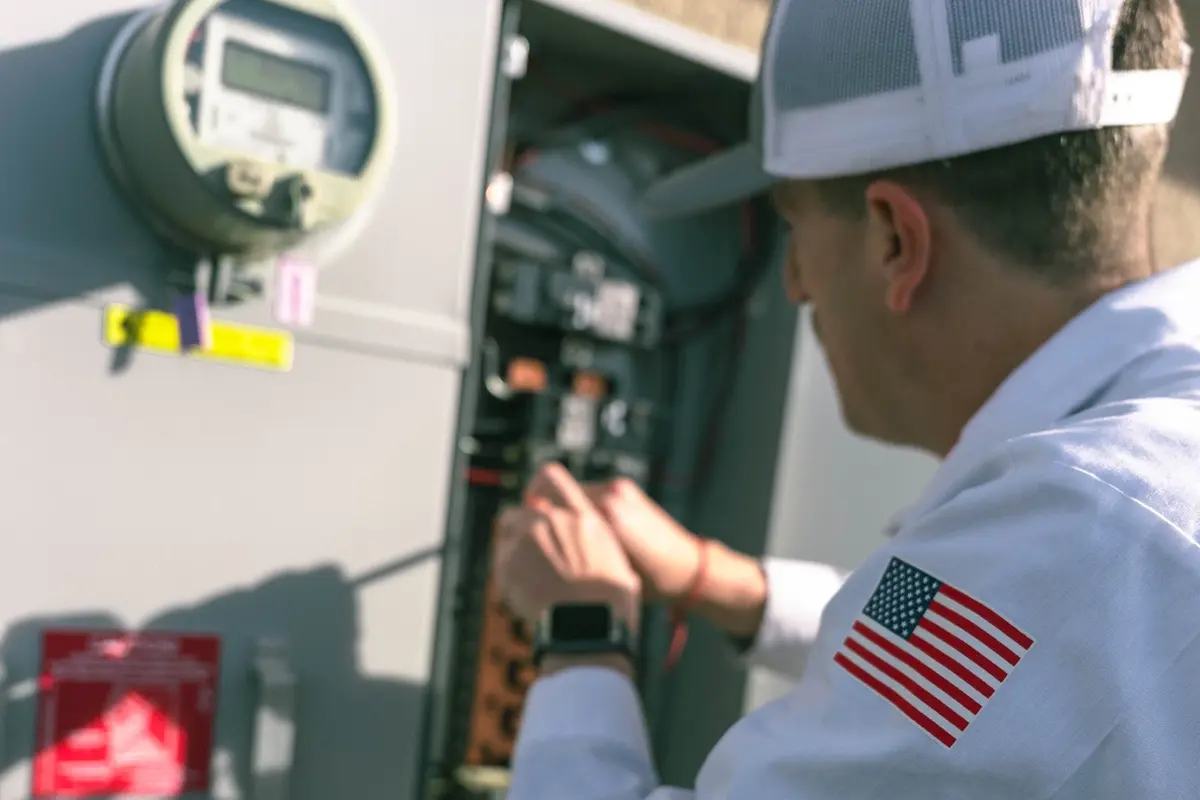
Each panel component in your breaker box has a specific job: receiving power, protecting wiring, and delivering electricity to every circuit. When one part fails, the whole system is affected.
Most homeowners open their panel only when something trips or stops working. Knowing what’s inside and warning signs saves time, money, and safety risks.
Key Takeaways
- A residential panel has 7 core components, each with a distinct protective or distribution role.
- The main breaker is the only switch that cuts power to your entire home.
- Bus bars carry high-voltage current; homeowners should never touch or modify them.
- AFCI and GFCI breakers protect against fire and electrocution, and most modern codes require them.
- Panels in Arizona can age more quickly due to the heat. A 25-year-old panel is worth inspecting regardless of appearance.
The 7 Core Components of a Residential Electrical Panel
1. Main Breaker
The main breaker sits at the top of your panel and is the largest breaker in the box, typically rated at 100, 150, or 200 amps. It controls all power entering the panel from the utility. Flip it off, and every circuit in your home goes dark.
It serves two purposes: as a disconnect during emergencies or electrical work, and as a last-resort protection device if an individual breaker fails to trip. If your main breaker trips on its own, total demand on your circuits has exceeded the panel’s rating.
If your home is adding major loads such as an EV charger, an HVAC upgrade, or a hot tub, your main breaker may need to be upsized. Our panel upgrade service covers what that involves.
2. Bus Bars
Bus bars are two thick metal bars running vertically inside the panel. They are always energized, carrying full voltage from the main breaker to each circuit. One bar carries each 120V leg from the utility.
Single-pole breakers (120V) snap onto one bar. Double-pole breakers (240V) span both. Bus bars are made of copper or aluminum and are rated for your panel’s full amperage. Never touch them, even with the main breaker off; the service wires above remain live.
3. Circuit Breakers
Circuit breakers are switches arranged in two columns inside the panel. Each controls one circuit and displays its amperage, typically 15A, 20A, 30A, or higher.
When a circuit draws too much current, the breaker trips. Inside, a bimetal strip heats up and opens the switch. Single-pole breakers handle 120V loads, such as lighting and outlets; double-pole breakers handle 240V loads, such as dryers and AC units.
Two specialty types matter: AFCI breakers detect arc faults that cause electrical fires, and GFCI breakers cut power within milliseconds if current leaks to ground. Both are required by code in specific locations in new construction. If your panel does not have them, ask about adding them. You can also read about how to fix circuit breakers that trip.
4. Neutral Bar
The neutral bar is a silver strip, usually on one or both sides inside the panel. Every circuit’s white neutral wire returns current from the outlet or appliance here.
The neutral bar connects to the utility’s neutral wire, routing current to the grid. Without a good neutral connection, 120V circuits won’t complete their loop or function. A loose neutral can cause voltage swings and damage electronics.
5. Ground Bar
The ground bar resembles the neutral bar and is often beside it. In older panels, it may be combined with the neutral bar. Each circuit’s bare copper ground wire ends here, connecting to a ground rod outside your home.
The ground wire carries no current unless there’s a fault. Its job is to provide a safe, low-resistance path to earth. If a hot wire touches metal, fault current flows to ground, not through a person.
6. Service Entry Wires
Three wires enter your panel from the utility: two hot wires, each at 120 volts, and a neutral. These feed directly into the main breaker and neutral bar.
These wires are live at all times, even with the main breaker off. Only the utility company can de-energize them. This is why panel work always requires a licensed electrician.
7. Open Slots
Most panels have unused slots on the bus bar for future breakers. These determine how much you can expand. If you have no open slots but need a circuit, add a sub-panel or upgrade. Our post on panel sizes covers which sizes fit your home.
Quick-Reference: What Each Component Does
| Component | Function | Warning Signs |
| Main Breaker | Master on/off switch for all home circuits | Whole house loses power; panel overload |
| Bus Bars | Distribute voltage from main breaker to circuits | Burning smell, heat, or visible damage |
| Circuit Breakers | Protect individual circuits from overcurrent | Breaker trips frequently or will not reset |
| Neutral Bar | Return path for current back to the grid | Voltage fluctuations, flickering lights |
| Ground Bar | Safety path to earth during a fault | Electric shocks from appliances |
| Service Wires | Carry utility power into the panel | Always live; never touch |
| Open Slots | Reserved space for future circuits | No space to add new breakers |
Things to Know About Your Electrical Panel Components
Panel labels matter. Every breaker should show what it controls. Unlabeled panels slow emergency response and make troubleshooting harder. Take 30 minutes to map your circuits if yours are blank.
A warm panel is not normal. Warmth near certain breakers signals a loose connection or overload. A warm main breaker area is more serious and needs prompt attention.
Double-tapped breakers are a red flag. Two wires on one breaker rated for one is a code violation and a fire risk. A licensed electrician can fix it quickly.
Rust or moisture inside the panel needs urgent attention. Panels in garages or utility rooms can develop condensation, which can corrode connections and create fault paths.
Arizona heat shortens panel life. A panel that lasts 40 to 60 years in a cooler climate may last only 25 to 30 years in the Prescott area due to heat cycling. If your panel is 20 years old or more, schedule an inspection.
If you spot these warning signs, contact us for a panel inspection before small issues become failures.
Schedule a Panel Inspection
Most homeowners only open their breaker box when something fails. By then, issues like a worn breaker, a loose neutral, or a double-tapped wire may have been hazardous for years. A 45-minute inspection by a licensed electrician tells you exactly what you have and what needs fixing.
Take control of your home’s safety and peace of mind. Contact Assurance Electrical today to schedule a detailed panel inspection or request a free quote.
Frequently Asked Questions
What are the main components of an electrical panel?
The main components are the main breaker, bus bars, circuit breakers, neutral bar, ground bar, service entry wires, and open slots for future circuits. Each plays a direct role in protecting and distributing power to your home.
What does each breaker in the panel control?
Each circuit breaker controls one circuit, which may cover a room, a set of outlets, or a single appliance. The label on the panel door identifies the area or device it protects. 15A and 20A single-pole breakers handle 120V circuits. Double-pole breakers handle 240V appliances such as dryers, water heaters, and AC units.
What is the difference between the neutral bar and the ground bar?
The neutral bar carries the return current back to the utility grid during normal operation. The ground bar only carries current during a fault, safely routing it to earth. In older panels, these are sometimes the same bar. In newer panels, they are separate.
Can I add a breaker to my electrical panel myself?
No. Adding a breaker requires working inside a live panel where bus bars carry full utility voltage even with the main breaker off. Incorrect installation can cause fire, electrocution, or a failed inspection. Contact Assurance Electrical for a safe, code-compliant circuit installation.
How do I know if my electrical panel needs to be replaced?
Key signs include breakers that trip frequently, a panel that is warm to the touch, burning smells near the panel, visible rust or corrosion, double-tapped breakers, no open slots, or a panel that is 25 or more years old. If your panel is a Federal Pacific or Zinsco brand, replacement is strongly recommended due to documented safety failures. Our team can assess your panel during a panel inspection.