
Electrical Panel
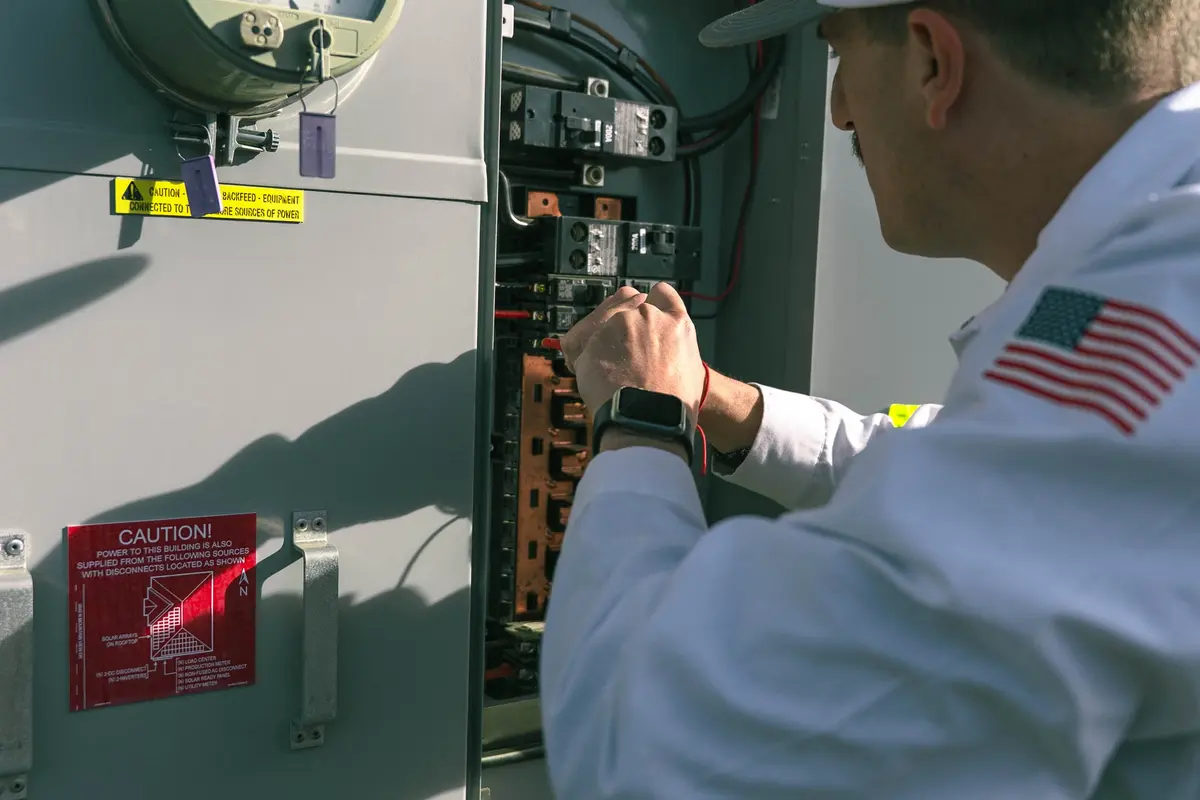
The most common electrical panel boards in homes are main breaker panels, which have a built-in disconnect switch; sub-panels, which extend circuits from the main panel; main lug panels, which receive power from an upstream panel and don’t have a main breaker; and transfer switch panels, which allow switching between power sources. Knowing your panel type reveals your home’s electrical capacity and upgrade options.
Key Takeaways
- Residential homes use one of four main panel types: main breaker, sub-panel, main lug, or transfer switch.
- Commercial and industrial buildings use PCC, MCC, and three-phase panels for higher power demands.
- Panel amperage (100A, 150A, 200A, 400A) determines how much load your electrical system can safely carry.
- Fuse boxes are outdated and should be replaced. Brands like Federal Pacific and Zinsco are known for safety hazards.
- L1 and L2 are the two power legs inside your panel. Both are required for 240V appliances such as dryers and EV chargers.
The 4 Residential Types of Electrical Panel Boards
1. Main Breaker Panel
This is the most common panel in Arizona homes. One large main breaker at the top controls all power to the house, with rows of individual circuit breakers below it. Flip the main breaker, and everything goes off. Flip a single circuit breaker, and you cut power to just that circuit.
Most homes built after 1990 use a 200-amp main breaker panel. If yours is rated at 100 amps and you are adding an EV charger or a new HVAC system, you will likely need an electric panel upgrade before you can proceed.
2. Sub-Panel
A sub-panel is an electrical distribution panel that is supplied by the main service panel. It is typically used in detached garages, workshops, guest casitas, or large additions where running multiple individual circuits directly from the main panel would be impractical or expensive. Unlike the main panel, a sub-panel does not receive power directly from the utility but rather through a feeder cable connected to a double-pole breaker in the main panel. It contains its own circuit breakers to distribute power to branch circuits within its location.
A sub-panel does not add total amperage, but redistributes it to another location. If you’re adding a garage or outdoor structure, a sub-panel is usually best. See how installation works for new builds and additions.
3. Main Lug Panel
A main lug panel looks like a main breaker panel but has no main breaker. Power connects directly to the terminal lugs. These always serve as sub-panels, controlled by a breaker upstream in the main panel. If you see one, a main breaker elsewhere on the property feeds it.
4. Transfer Switch Panel
A transfer switch panel allows you to switch your home’s power source from the utility grid to a backup generator while preventing power from feeding back into the utility lines, a crucial safety feature. Manual transfer switches require you to turn the switch during an outage, while automatic transfer switches (ATS) detect outages and switch sources automatically. When adding a generator, a transfer switch is necessary for code compliance.
Residential Panel Types at a Glance
| Panel Type | Has Main Breaker | Primary Use |
| Main Breaker Panel | Yes | Primary power distribution in the home |
| Sub-Panel | No (fed by main) | Garages, shops, additions, casitas |
| Main Lug Panel | No | Secondary distribution, always a sub-panel |
| Transfer Switch Panel | Varies | Homes with backup generators |
Commercial and Industrial Panel Types
Three-Phase Panels
Standard residential power uses a single-phase system: two hot legs (L1 and L2) plus a neutral. Three-phase systems, common in commercial and industrial applications, add a third hot leg (L3). This enables more efficient distribution of larger electrical loads. Three-phase panels are typical in commercial buildings, manufacturing facilities, and large residential complexes.
Power Control Center (PCC) Panels
A PCC (Power Control Center) panel acts as the main power distribution hub for an industrial facility. It receives high-voltage electricity from the utility, steps it down via transformers, and distributes it to various sections of the facility using circuit breakers, relays, and metering equipment. PCC panels manage and direct power throughout large facilities such as factories and warehouses.
Motor Control Center (MCC) Panels
An MCC (Motor Control Center) panel manages the operation of electric motors in industrial settings. It allows each motor, such as a pump, fan, or conveyor, to be started, stopped, and protected individually. Inside the MCC are motor starters, contactors, overload relays, and variable-frequency drives, all consolidated in a single enclosure, ensuring safe, organized motor control.
Fuse Boxes (Outdated)
Fuse boxes, an older technology, contain fuses that blow and must be replaced when a circuit is overloaded, unlike modern breakers, which can be reset. Because homeowners sometimes install oversized fuses to prevent tripping, removing the intended protection fuse boxes poses significant safety risks. They cannot handle modern electrical loads and are not compatible with current codes; replacement is essential.
Panel Amperage: What the Numbers Mean
Amperage rating tells you how much total load a panel can safely handle at once.
- 100-amp panels are found in older homes, usually built before 1980. Adequate for basic lighting, outlets, and gas appliances. Not enough for modern all-electric homes.
- 150-amp panels handle most modern appliances but may run short if you add EV charging or a large HVAC system.
- 200-amp is the current standard for new construction in Arizona. Comfortable for two HVAC units, electric appliances, and an EV charger.
- 400-amp service is needed for large homes with high demand, often using a main panel and one or more sub-panels feeding different zones.
Not sure if your panel size fits your current usage? Our post on electrical panel sizes shows what your home actually needs.
For those curious about technical details, here’s a quick explanation of what L1, L2, and L3 mean in electrical panels.
L1 and L2 are the two hot legs in a standard residential panel, each carrying 120 volts. Single-pole breakers (for lights, outlets, and most appliances) draw from one leg; double-pole breakers (for dryers, water heaters, and EV chargers) draw from both to deliver 240 volts.
L3 is a third hot leg found exclusively in three-phase commercial and industrial systems and does not exist in standard residential panels. In homes, only L1 and L2 are present. An imbalance between L1 and L2 loads may cause problems like flickering or tripping circuits, which an electrician can identify during inspection.
Things to Know Before You Touch Your Panel
Federal Pacific and Zinsco panels have documented histories of breakers that do not trip correctly under overload conditions. If you have one, schedule a replacement.
A warm panel cover is not normal. Heat at the panel face signals a loose connection or an overloaded circuit. Call an electrician before it becomes a fire.
Adding breakers has limits. The NEC 120 percent rule caps total breaker amperage at 120 percent of your main breaker rating. A 200-amp panel can carry up to 240 amps of breaker capacity across all circuits.
Labels matter. Every breaker should be clearly labeled. If yours are not, map each circuit. It saves time and stress during an emergency.
If your panel trips frequently, that is a signal worth investigating. Our breakdown of circuit breaker tripping causes explains what may be happening.
Not Sure Which Panel You Have? Let’s Take a Look.
If your panel is older than 25 years, unlabeled, warm to the touch, or you are not sure what type it is, an inspection is the fastest way to get clarity.
Assurance Electrical serves Prescott, Prescott Valley, Chino Valley, and the Quad Cities area. We inspect, upgrade, and install all panel types. Contact us today for a free quote or to schedule a panel inspection.
Frequently Asked Questions
How many types of electrical panel boards are there?
Four primary types are used in residential settings: main breaker panels, sub-panels, main lug panels, and transfer switch panels. Commercial and industrial buildings add three-phase, PCC, and MCC panels. Fuse boxes are an older category still found in pre-1970s homes, but are not code-compliant for modern use.
What is an HT and LT panel?
HT (High Tension) panels operate above 1,000 volts and are used in utility substations and large industrial facilities. LT (Low Tension) panels operate below 1,000 volts and serve commercial buildings and residential systems. Your home panel is an LT system running at 120/240 volts. Most homeowners will never encounter an HT panel.
What is L1, L2, and L3 electrical?
L1 and L2 are the two 120V hot legs in a residential panel. Single-pole breakers use one leg (120V). Double-pole breakers use both (240V). L3 exists only in commercial three-phase systems, not standard home panels.
What is a PCC and MCC panel?
A PCC (Power Control Center) manages and distributes incoming power across an industrial facility. An MCC (Motor Control Center) controls electric motors, with each motor getting its own protected compartment for starting, stopping, and speed control. Both are industrial panels not found in residential settings.
What are the different types of panel boxes?
The most common panel boxes are main breaker panels (most homes), sub-panels (garages and additions), main lug panels (secondary distribution), transfer switch panels (generator hookups), and fuse boxes (older homes, now outdated). Each type serves a specific role depending on where and how power needs to be distributed. For a deeper look at how each type functions, our post on what an electrical panel board is covers the internal components in detail.