
Electrical Safety, Electrical Tips, GFCI
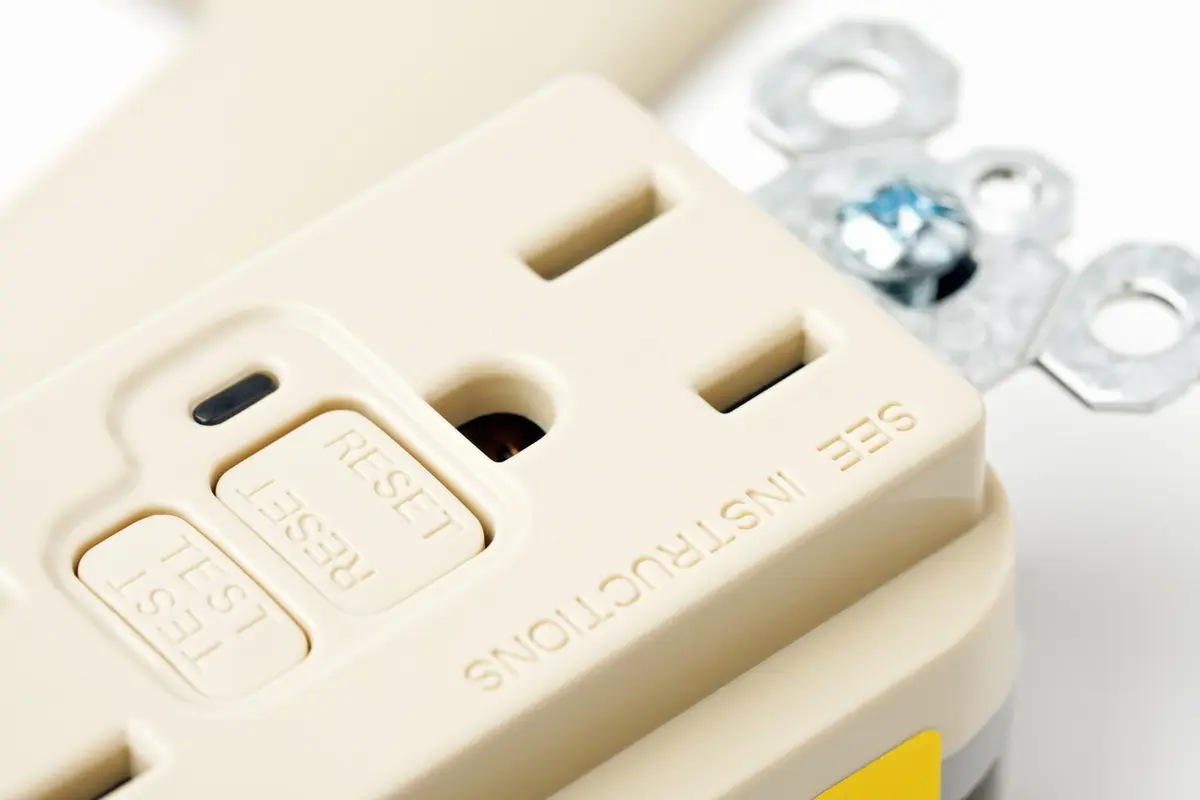
A GFCI protects people from potentially fatal electrical shock by detecting ground faults, while an AFCI helps prevent electrical fires by monitoring for dangerous arcing conditions in your wiring. These two types of protection solve completely different problems, and many modern homes need both. If you’ve ever stared at your electrical panel wondering what the difference between GFCI and AFCI breakers is, you’re not alone. It’s one of the most common questions homeowners ask before a remodel or panel upgrade, and the answer has real safety consequences.
Key Takeaways
- GFCI protection guards against electrical shock in wet or damp locations like kitchens, bathrooms, and outdoor outlets.
- AFCI protection guards against electrical fires caused by damaged, pinched, or arcing wires inside walls and cords.
- Both are required by the National Electrical Code (NEC) in specific areas of a home, and many rooms need both.
- Dual-function breakers that combine GFCI and AFCI protection in one unit are widely available.
- The 2023 NEC expanded GFCI requirements to include virtually all kitchen receptacles, including appliances like refrigerators and dishwashers.
- You should never replace an AFCI breaker with a standard breaker without consulting a licensed electrician, as this often violates code.
The Core Problem Each Device Solves
Think of it this way: a GFCI is protecting your body, and an AFCI is protecting your house. They’re both essential, but they’re watching for completely different electrical threats.
How GFCI Works
A ground fault happens when electricity escapes its intended path and travels somewhere it shouldn’t, often through a person. If you’re standing barefoot on a wet bathroom floor and touch a faulty appliance, electricity can pass through your body to the ground. That’s a ground fault, and it can kill you.
GFCI stands for Ground Fault Circuit Interrupter. The device continuously monitors the current flowing out of a circuit versus the current returning. If there’s a difference of just 4 to 6 milliamps, it trips in less than 1/40th of a second. That’s fast enough to prevent cardiac arrest in most cases. Since GFCIs were introduced into the NEC in the 1970s, household electrocutions in the United States have dropped by roughly 50 percent. That’s a significant number of lives saved by a relatively inexpensive device.
If you’re curious about how GFCIs work at a deeper level, you can read more about what GFCI protection is and why it is important to get the full picture before making any decisions about your home.
How AFCI Works
Arc faults are a different story. They don’t necessarily shock you. Instead, they can quietly start a fire inside your walls where you’ll never see it coming. An arc fault occurs when electricity “jumps” across a gap in damaged, pinched, or deteriorated wiring. This can happen when a nail is driven through a wire during a renovation, when a cord gets pinched under furniture, or when wiring just gets old and the insulation cracks.
An AFCI breaker uses advanced microprocessor technology to analyze the electrical signature of the circuit in real time. It’s actually smart enough to tell the difference between the normal, harmless sparks a vacuum cleaner motor creates and a dangerous, uncontrolled arc. Arc faults contribute to an estimated 40,000 home electrical fires every year in the United States. AFCI breakers were introduced into the NEC specifically to address that problem.
Where Each Type of Protection Is Required
The NEC dictates where each type of protection must be installed, and these requirements have expanded with every new code cycle. Your local jurisdiction may adopt different code versions, so checking with a licensed local electrician is always a smart first step.
GFCI Requirements
GFCI protection is required anywhere water and electricity could accidentally meet. Current NEC requirements cover:
- All kitchen receptacles (the 2023 NEC expanded this to include outlets for the refrigerator, microwave, garbage disposal, and dishwasher)
- Bathrooms
- Garages and accessory structures
- Outdoor outlets
- Basements (unfinished)
- Crawl spaces
- Laundry areas
- Boat houses
The 2023 NEC update was a notable expansion. Previously, only countertop receptacles in kitchens needed GFCI protection. Now, virtually every kitchen outlet must be on a GFCI-protected circuit. If your home was built before these updates, it may not be fully compliant with current standards.
AFCI Requirements
AFCI protection is required by the NEC for nearly all 120-volt, 15- and 20-amp branch circuits in habitable rooms. This includes:
- Bedrooms (AFCIs were first required here in the 1999 NEC)
- Living rooms and family rooms
- Dining rooms
- Hallways and closets
- Home offices
- Sunrooms and recreation rooms
The key distinction is that AFCI requirements focus on living spaces where wiring runs through finished walls and ceilings, where arc faults are harder to detect visually and more likely to ignite building materials.
|
Protection Type |
Primary Risk Addressed |
Key Locations Required |
|
GFCI |
Electrical shock from ground faults |
Kitchens, bathrooms, garages, outdoors, laundry, basements |
|
AFCI |
Electrical fires from arc faults |
Bedrooms, living rooms, dining rooms, hallways, offices |
|
Dual-Function |
Both shock and fire risk |
Anywhere both types are required simultaneously |
Understanding the Different Outlet and Breaker Types
GFCI protection can be provided in two ways: through a GFCI outlet installed at the receptacle itself, or through a GFCI breaker installed in the panel that protects the entire circuit. AFCI protection, on the other hand, is typically installed as a breaker at the panel rather than at the outlet.
This matters because it changes where you go when something needs service or replacement. If a GFCI outlet trips, you reset it at the wall. If a GFCI or AFCI breaker trips, you go to your panel. If you have a GFCI outlet that’s aging or failing, knowing how to replace a GFCI correctly can save you a service call, though panel-level breaker work should always involve a licensed professional.
It’s also worth knowing that the variety of protective devices available has grown considerably, and reviewing the full range of electrical outlet types can help you understand what’s already installed in your home and what might need upgrading.
For homeowners in Northern Arizona, Assurance Electrical Services handles everything from simple outlet replacements to full panel upgrades for homes in Prescott Valley, Prescott, Chino Valley, and throughout Yavapai County. Their team is licensed (ROC #322083), bonded, and insured, and they’re available at (928) 713-2177 for both routine work and 24/7 emergency electrical situations.
When You Need Both, and How Dual-Function Breakers Help
Here’s where things get a little layered. Many rooms in a home now require both GFCI and AFCI protection. A kitchen is one example: it needs GFCI protection due to water exposure and AFCI protection because it’s a habitable space with wiring running through finished walls.
In these situations, you have two options. You can install a GFCI outlet on a circuit that’s also protected by an AFCI breaker, or you can install a single dual-function breaker that provides both types of protection in one unit. The dual-function breaker is usually cleaner and more efficient, especially in homes where panel space is limited.
Older homes in areas like Prescott and Prescott Valley that are going through kitchen remodels or additions often need both types added simultaneously. This is exactly the kind of work where having a local, experienced electrician matters. A professional can assess the existing wiring, identify what’s already protected, and recommend the right combination without overcomplicating things or unnecessarily upselling extra work.
If you’re planning any outlet additions or changes as part of a remodel or new room, professional electrical outlet installation is the right move to ensure you get the protection type right from the start, which is far easier than correcting it later.
Things to Know
- GFCI protection can be provided at the outlet level or the breaker level; AFCI protection is almost always provided at the breaker level.
- Not all electricians and inspectors follow the same code cycle. The NEC is updated every three years, but local jurisdictions choose which version to adopt and when.
- A tripping AFCI breaker is not always a sign of a faulty breaker. It may indicate a real wiring problem in your home worth investigating.
- GFCI outlets downstream from a GFCI breaker may cause nuisance tripping due to double protection. A licensed electrician can help you avoid this setup.
- Older homes wired with aluminum wiring or knob-and-tube have additional considerations when adding AFCI protection. Always disclose your home’s wiring type to your electrician.
- Dual-function AFCI/GFCI breakers typically cost between $40 and $60 each, compared to $5 to $10 for a standard breaker, but they provide layered protection that a standard breaker simply cannot.
What Is the Difference Between GFCI and AFCI Breakers
GFCI and AFCI breakers are not interchangeable, competing products. They’re complementary layers of safety designed to protect against two very different electrical hazards: shock and fire. A home with only one type of protection is only half-covered, and given how inexpensive these devices are relative to the damage they prevent, there’s really no good reason to skip either one.
If you’re in the Prescott Valley area or anywhere across Northern Arizona and you’re unsure whether your home has adequate GFCI and AFCI coverage, Assurance Electrical Services is ready to help. Call (928) 713-2177 or request a quote online to schedule a safety assessment with a licensed, family-owned team that’s been serving the Quad Cities area for over 20 years.
Frequently Asked Questions
1. Where should you not use AFCI breakers?
AFCI breakers are generally not required or recommended for circuits serving dedicated appliances like refrigerators, sump pumps, or smoke detectors, where nuisance tripping is a known concern. They’re also typically not required for garage circuits, outdoor outlets, or bathroom circuits, where GFCI is the primary code requirement. Some older appliances and motors create electrical noise that can trigger an AFCI breaker unnecessarily, so placement matters and a licensed electrician can help you figure out which circuits genuinely need AFCI coverage.
2. Can you use an AFCI breaker with a GFCI outlet?
Yes, you can combine an AFCI breaker with a GFCI outlet on the same circuit, and this is sometimes the most practical approach for rooms that require both types of protection. The AFCI breaker handles arc fault detection at the panel level, while the GFCI outlet handles ground fault protection at the receptacle. Just be aware that having a GFCI outlet downstream of a GFCI breaker can sometimes cause nuisance tripping, since both devices monitor for the same condition. A dual-function breaker is often the cleaner solution.
3. Do I need both GFCI and AFCI?
Yes, many areas of a modern home require both types of protection, and each serves a distinct safety function. GFCI protects against shock in wet locations, and AFCI protects against fire from arcing wires in living spaces. Some rooms, such as a kitchen or a laundry area adjacent to a bedroom hallway, may require both. Rather than guessing, have a licensed electrician review your home’s current setup against the NEC edition adopted by your local jurisdiction.
4. Should bathrooms have GFCI or AFCI?
Bathrooms are required to have GFCI protection because of the proximity to water, not AFCI protection. The NEC specifically mandates GFCI for all bathroom receptacles. AFCI protection is focused on habitable living spaces like bedrooms and living rooms. That said, some higher-end installations do include both for maximum protection, but it’s not a code requirement in most U.S. jurisdictions, specifically for bathrooms.
5. Can I replace an AFCI with a regular breaker?
Replacing an AFCI breaker with a standard breaker is not legal in most jurisdictions if AFCI protection is required by code for that circuit. Doing so would bring your home out of code compliance, which can create serious issues during a home sale inspection or insurance claim after a fire. If your AFCI breaker is tripping repeatedly, the right answer is to diagnose why, not to swap it for a standard breaker. Call a licensed electrician to investigate the root cause.